How to Bake Crusty Bread Without a Dutch Oven
Steam is the secret, and you can create it at home.
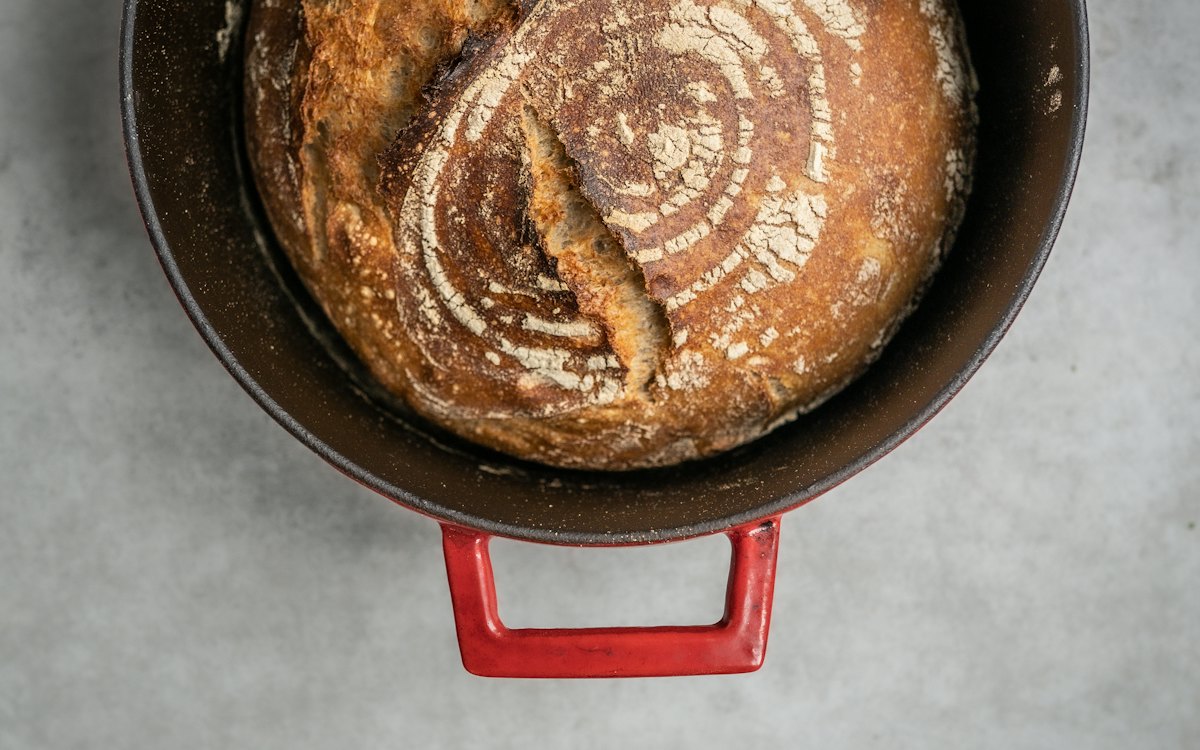
A covered Dutch oven traps steam from the dough, which keeps the crust soft long enough for the loaf to expand. You can get a similar effect with a hot baking sheet or stone and a pan of hot water or ice cubes for steam.
Why steam matters
In the first minutes of baking, a moist surface stays flexible, letting the loaf rise fully (oven spring).
Steam also helps the crust turn glossy and crackly.
The baking-sheet method
Place a heavy baking sheet or pizza stone on the middle rack and a sturdy metal pan on the rack below. Preheat to 450–475°F (230–245°C).
Slide the loaf onto the hot sheet and immediately pour about 1 cup of boiling water into the lower pan. Close the door quickly.
Other options
An upside-down deep roasting pan or a large oven-safe bowl over the loaf works as a makeshift cover.
Remove the steam source or cover after about 20 minutes so the crust can brown and crisp.
Protect your oven window: never splash water on hot glass, and use a towel when pouring.
Frequently asked questions
Can I use a glass baking dish?
Avoid pouring water into glass or ceramic at high heat — it can crack. Use metal.
Will the crust be as good?
Very close. The Dutch oven is just the most consistent home method.