How to Knead Dough (and How to Know When to Stop)
What kneading does, two easy methods and the windowpane test.
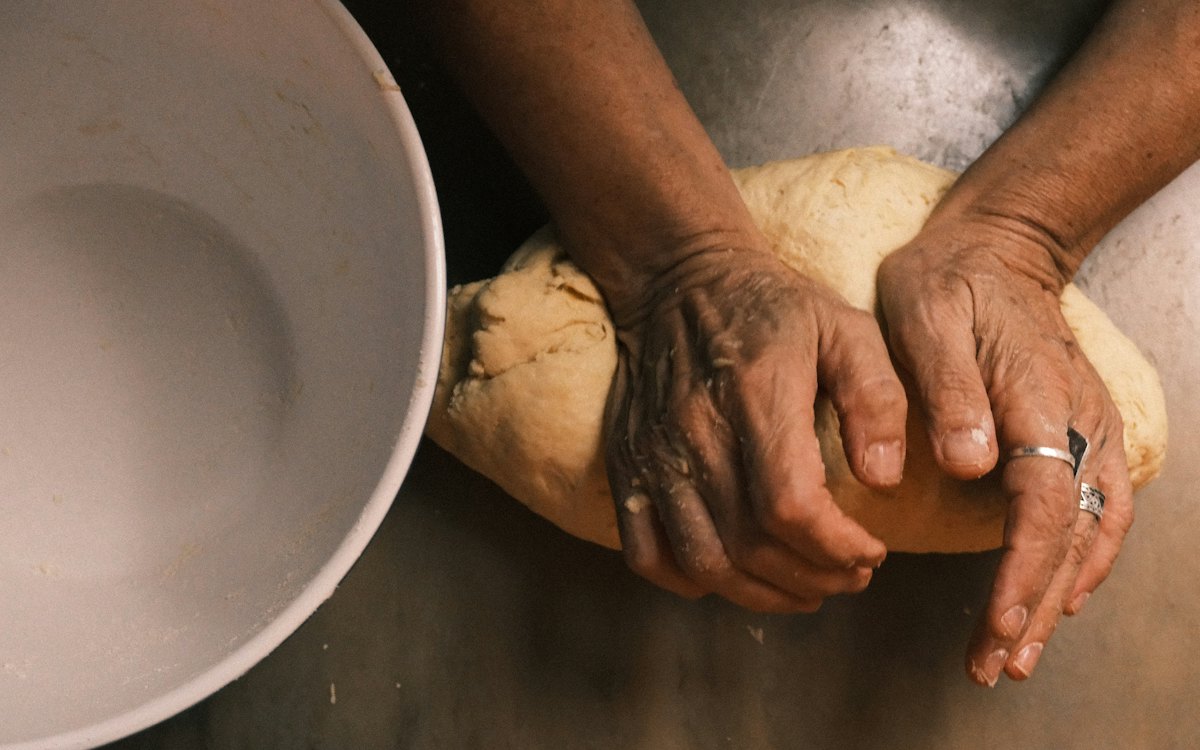
Kneading organizes gluten into a strong, stretchy network so the dough can hold gas. Push the dough away with the heel of your hand, fold it back, turn and repeat for about 8–12 minutes, until it’s smooth and passes the windowpane test.
The basic motion
On a lightly floured counter, push the dough away with the heel of your hand, fold it back over itself, give it a quarter turn and repeat.
At first it will be shaggy and sticky. Over several minutes it becomes smoother, springier and less sticky.
The windowpane test
Pinch off a small piece and gently stretch it between your fingers. If it stretches thin enough to let light through without tearing, the gluten is well developed.
If it tears quickly, knead a few minutes more and test again.
You don’t always need to knead
Time also builds gluten. Wet doughs left to rest for many hours develop structure on their own — the idea behind no-knead bread.
Stretch-and-folds every 30 minutes during the first rise are a gentle middle ground, common with sourdough and focaccia.
Resist adding lots of extra flour when dough feels sticky. Wet hands or a bench scraper help more than flour, which can make bread dry.
Frequently asked questions
Can I over-knead by hand?
It’s very hard to do by hand. With a stand mixer, it’s possible; stop when the dough passes the windowpane test.
How long in a stand mixer?
Usually 5–8 minutes on low to medium speed with the dough hook.