How to Tell When Dough Has Proofed Enough
The poke test, size cues and why the clock is only a guide.
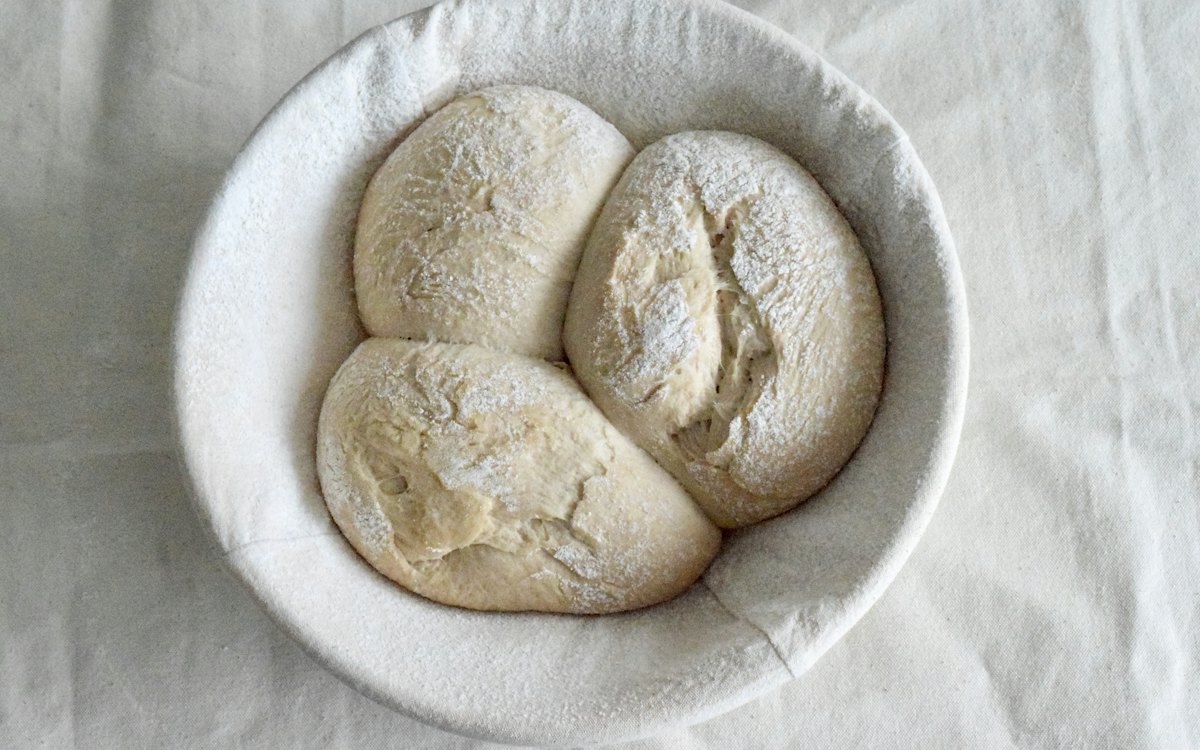
Properly proofed dough has roughly doubled (for the first rise), looks puffy and springs back slowly when poked. If it springs back instantly it needs more time; if the dent stays and the dough sighs, it may be over-proofed.
Watch the dough, not the clock
Recipe times assume a certain room temperature. In a cool kitchen dough can take twice as long; in a hot one, half.
A straight-sided container with a mark at the starting level makes the first rise easy to judge.
The poke test
Flour a fingertip and press about half an inch (1 cm) into the shaped dough. If the dent springs back slowly and only partly, it’s ready to bake.
If it springs back immediately, give it more time. If it doesn’t spring back at all, bake right away — it may spread a little but will still be good.
First rise vs. final proof
The first rise (bulk fermentation) builds flavor and strength; most doughs roughly double.
The final proof after shaping is usually shorter. The loaf should look puffy and about 1.5 times its shaped size.
Over-proofed dough isn’t ruined. Gently reshape it, let it rise again for a shorter time and bake.
Frequently asked questions
Where is a good warm spot to proof?
An oven with only the light on is a common trick; it usually stays a few degrees warmer than the room.
Does the poke test work for sourdough?
Yes, though cold-proofed sourdough springs back more slowly because the dough is firm from the fridge.